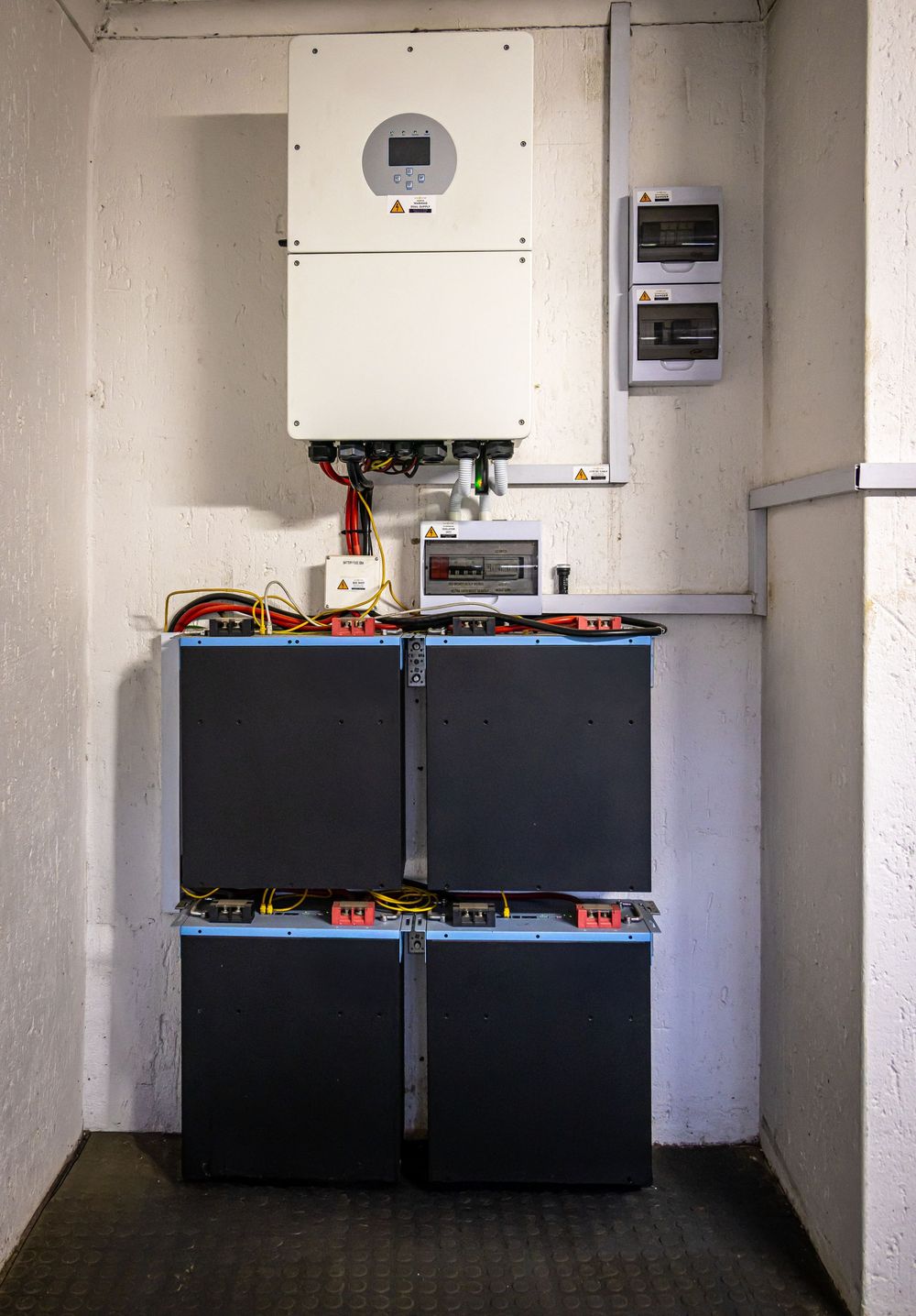
Why battery storage matters more under California NEM 3.0
California solar economics have changed.
Under the Net Billing Tariff, commonly called
NEM 3.0, new participating solar customers
of Southern California Edison (SCE),
Pacific Gas and Electric (PG&E) and
San Diego Gas & Electric (SDG&E)
generally receive significantly lower
compensation for electricity exported
to the grid than the retail price
paid for electricity they purchase.
Export credits can vary by time and
other tariff factors. This means
the timing of solar production,
household electricity usage and
battery discharge can materially
affect the economics of a system.
For example, rooftop panels may
produce substantial electricity
during the afternoon when no one
is home. Without a battery, unused
electricity can be exported.
Later, when household electricity
demand rises, the homeowner may
purchase power from the utility
at applicable retail rates.
A battery can store some of that
excess daytime generation for
later household consumption.
Doing so may reduce electricity
purchased during expensive periods.
However, a battery does not
guarantee savings or a particular
payback period. The outcome depends
on installation cost, battery
capacity, charging and discharging
efficiency, household demand,
utility rates and how the
system is operated.
Your utility matters
The statewide investor-owned utility
Net Billing Tariff should not be
applied automatically to every
Southern California homeowner.
Glendale Water & Power,
Pasadena Water & Power,
Burbank Water & Power and
Los Angeles Department of Water
and Power operate their own
utility programs and rate structures.
The exact utility and tariff
should be confirmed before
estimating battery savings.
Can you add a battery to an existing solar installation?
Many existing rooftop solar systems
can be evaluated for battery storage
retrofits. You do not necessarily
need to replace functional panels
or rebuild the complete system.
The first step is determining
how your existing equipment operates.
A solar system using a string inverter
may have different integration
options from a system with
microinverters.
Battery designs may use AC coupling,
DC coupling or other manufacturer-specific
configurations. The appropriate approach
depends on equipment compatibility,
desired backup functions and
applicable electrical requirements.
AC-coupled batteries
In an AC-coupled configuration,
battery storage is integrated
on the AC side of the electrical
system through compatible
power-conversion and control equipment.
This approach can be useful
for certain existing solar systems
because the current solar inverter
may be retained. However,
compatibility must still be checked,
especially if the homeowner wants
solar charging during a grid outage.
DC-coupled batteries
Some systems connect solar generation
and battery storage through compatible
DC-side equipment. Depending on
the installation, this may involve
replacing or changing an existing
inverter or other system components.
Neither configuration is automatically
the best choice for every homeowner.
The installer should explain
the proposed design and why
it suits the existing system.
What gets evaluated before a retrofit?
- Existing solar inverter and system architecture
- Battery and inverter compatibility
- Household electricity consumption patterns
- Desired backup loads and duration
- Main electrical panel and service configuration
- Suitable battery mounting location
- Applicable utility interconnection requirements
- Local permitting, safety and equipment-clearance rules
- Whether modifications affect existing tariff treatment
Changes to an older solar system
can sometimes affect utility
interconnection arrangements.
Before approving a retrofit,
ask whether the proposed work
could change existing net-metering
or billing terms.
Will a battery keep your home running during an outage?
Backup power is one of the
main reasons homeowners consider
battery storage, particularly
in areas affected by utility
outages or planned power shutoffs.
A properly installed backup-capable
battery can disconnect from the
utility grid when required and
supply power to designated circuits.
This capability requires the
appropriate controls, isolation
equipment and system design.
Not every battery installation
automatically provides backup.
A grid-connected battery designed
only for energy management may
function differently from a
system equipped for outages.
Essential-load backup
Some homeowners prioritize a
smaller group of circuits,
such as refrigeration, lighting,
internet equipment and selected
outlets. This can reduce the
amount of energy needed during
an outage.
Whole-home backup
Larger configurations may support
more household loads, but whole-home
backup should not be assumed
merely because a battery has
substantial storage capacity.
Air conditioning, electric heating,
cooking equipment, pumps and
EV charging can demand significant
electrical power. The design must
account for both instantaneous
power requirements and total
stored energy.
Battery capacity is not backup duration
Battery capacity is commonly
measured in kilowatt-hours (kWh).
Power output is measured in
kilowatts (kW). Both matter.
A battery with enough stored
energy may still be unable
to start or supply certain
large appliances if their
power requirements exceed
the system's capabilities.
Ask the installer which
circuits will be backed up,
what loads the system can support
and what assumptions are used
for any runtime estimate.
Can you install a home battery without solar panels?
Yes. Certain home battery systems
can operate without rooftop solar.
These batteries charge from
utility electricity and may
discharge later for backup
or energy-management purposes.
Battery-only installations may
interest homeowners with roofs
unsuitable for panels, those
planning a future solar installation,
or households primarily concerned
about backup power.
Whether buying electricity
at one time and using stored
energy later makes financial
sense depends on the applicable
utility tariff and battery losses.
Charging and discharging also
involve energy losses, so the
amount of electricity later
delivered is less than the
amount originally used to
charge the battery.
Grid charging, export permissions
and participation in certain
incentive programs may involve
additional restrictions.
These should be checked for
the specific equipment and utility.
Brightstone Renewable Energy
offers battery installations
both with and without solar.
Home battery brands: Tesla, Enphase and FranklinWH
Battery brands differ in
equipment design, usable capacity,
output capability, backup
architecture, monitoring,
expandability and compatibility.
Comparing brand names alone
is not enough to determine
which battery suits a home.
The complete installed system
matters more than any single
specification.
Tesla Powerwall
Tesla Powerwall is a residential
energy storage product family
designed for compatible solar
and home electrical installations.
Available functionality depends
on the particular model and
system configuration.
Homeowners considering Powerwall
should ask about existing solar
compatibility, backup equipment,
monitoring integration and
the electrical loads they
want to support.
Enphase battery storage
Enphase offers residential
battery storage equipment
within its energy system
ecosystem. Enphase-based
solar installations may have
integration options depending
on the installed microinverters,
gateway and battery generation.
Existing Enphase equipment
does not guarantee compatibility
with every battery model.
An installer should evaluate
the complete configuration.
FranklinWH energy storage
FranklinWH provides residential
energy storage equipment
designed for home energy
management and backup-capable
installations.
As with other manufacturers,
system design must account
for backup controls,
electrical requirements,
installation location
and the homeowner's goals.
Brightstone's equipment relationships
Brightstone reports certified
installer status for Tesla,
Enphase and FranklinWH.
It also identifies certified
installer relationships with
SolarEdge, Qcells and SPAN.
These relationships do not
mean every product is suitable
for every home. Availability,
compatibility and the final
equipment recommendation
should be established during
the contractor's assessment.
What about your electrical panel?
A battery installation may
require evaluation of the
home's main electrical panel,
service equipment, grounding
and available installation space.
An older panel does not
automatically need replacement,
but its capacity, condition
and compatibility with the
proposed design must be checked.
Some projects may require
a panel upgrade or additional
electrical equipment. The
installer should explain
whether these improvements
are necessary and include
them in the project scope.
Brightstone offers main panel
upgrades and related electrical
services in addition to solar
and battery installations.
How much battery storage do you need?
The answer depends on your
objective. A battery sized
mainly for shifting solar
electricity into evening hours
may differ from one designed
for extended outage support.
A useful assessment reviews
recent electricity bills,
hourly or interval usage
data when available,
existing solar production,
major appliances and
desired backup circuits.
If backup is important,
distinguish the amount
of energy you want to store
from the amount of electrical
power required at one time.
Also ask whether the system
can be expanded later,
and whether expansion would
require changes to other
installed equipment.
Avoid selecting battery
capacity based only on
a generic estimate of
average household consumption.
Two homes with similar
monthly electricity bills
can have very different
daily usage patterns.
Battery financing and incentives in 2026
Financing can reduce the
amount of cash needed
at installation, but it
does not eliminate the
total cost of the system.
Brightstone reports offering
$0-down financing options
through GoGreen Home and
Energy Loan Network.
Approval, eligible work,
interest rates, repayment
periods and other terms
depend on the applicable
program and borrower.
Brightstone states that
its systems are customer-owned
rather than solar leases.
Buyers should review the
actual contract and financing
documents to understand
ownership and obligations.
The federal homeowner 30% credit has ended
The federal Residential Clean
Energy Credit under Section 25D
ended for homeowner expenditures
made after December 31, 2025.
Homeowners should not subtract
a federal 30% purchase credit
from a new 2026 battery project
based on outdated promotional
materials.
Other state or utility programs
may have different requirements,
funding limitations and
eligibility rules. For example,
California's Self-Generation
Incentive Program has offered
storage incentives to eligible
customers, but availability
and current terms must be
verified before being included
in an estimate. Commercial
tax treatment is separate
from the homeowner credit.
What does the battery installation process involve?
-
Discuss your goals.
Identify whether your priority
is backup power, greater
onsite solar consumption,
rate management or a
combination of these.
-
Review existing equipment.
The installer evaluates
the solar system, electrical
service, monitoring and
major household loads.
-
Develop a suitable design.
Equipment selection should
account for compatibility,
capacity, output requirements,
installation location
and applicable utility rules.
-
Review the proposal.
Compare equipment, installation
costs, backup coverage,
warranty terms, financing
and any assumptions about savings.
-
Complete required approvals.
The contractor determines
permitting, inspection
and utility coordination
requirements for the project.
-
Install, commission and verify.
After installation, the
equipment should be tested,
monitoring configured and
the homeowner shown how
to view system operation.
Get connected with a licensed battery installer
SoCal Solar Help is an independent
information and referral website.
Battery inquiries are referred
to Brightstone Renewable Energy,
a Brightstone Electric company,
California contractor license
#1086871.
Brightstone has been in business
since 2017 and reports more
than 500 completed projects,
a 25-year workmanship warranty
and 5.0-star ratings on
Google, Yelp and Thumbtack.
Warranty scope and terms
should be reviewed in the
contractor's written agreement.
Its service area extends
from Lancaster to San Diego,
subject to project eligibility
and scheduling availability.
Call or text
(818) 863-6250
to discuss battery storage
for an existing solar
installation or a home
without solar panels.